
简介
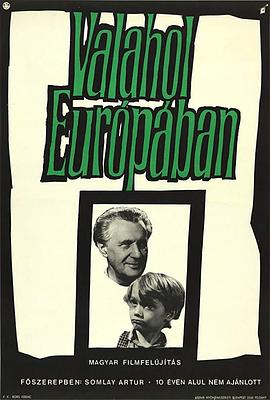
Somewhere in the remote region, the war ends. In the midst of ruined cities and houses in the streets, in rural hamlets, everywhere where people still live, are children who have lost their homes and parents. Abandoned, hungry, and in rags, defenseless and humiliated, they wander through the world. Hunger drives them. Little streams of orphans merge into a river which rushes forward and submerges everything in its path. The children do not know any feeling; they know only the world of their enemies. They fight, steal, struggle for a mouthful of food, and violence is merely a means to get it. A gang led by Cahoun finds a refuge in an abandoned castle and encounters an old composer who has voluntarily retired into solitude from a world of hatred, treason, and crime. How can they find a common ground, how can they become mutual friends The castle becomes their hiding place but possibly it will also be their first home which they may organize and must defend. But even for this, the price will be very high. To this simple story, the journalist, writer, poet, scriptwriter, movie director, and film theoretician Béla Balázs applied many years of experience. He and the director Géza Radványi created a work which opened a new postwar chapter in Hungarian film. Surprisingly, this film has not lost any of its impact over the years, especially on a profound philosophical level. That is to say, it is not merely a movie about war; it is not important in what location and in what period of time it takes place. It is a story outside of time about the joyless fate of children who pay dearly for the cruel war games of adults. At the time it was premiered, the movie was enthusiastically received by the critics. The main roles were taken by streetwise boys of a children's group who created their roles improvisationally in close contact with a few professional actors, and in the children's acting their own fresh experience of war's turmoil appears to be reflected. At the same time, their performance fits admirably into the mosaic of a very complex movie language. Balázs's influence revealed itself, above all, in the introductory sequences an air raid on an amusement park, seen in a montage of dramatic situations evoking the last spasms of war, where, undoubtedly, we discern the influence of classical Soviet cinematography. Shooting, the boy's escape, the locomotive's wheels, the shadows of soldiers with submachine guns, the sound of a whistle—the images are linked together in abrupt sequences in which varying shots and expressive sharp sounds are emphasized. A perfectly planned screenplay avoided all elements of sentimentality, time-worn stereotypes of wronged children, romanticism and cheap simplification. The authors succeeded in bridging the perilous dramatic abyss of the metamorphosis of a children's community. Their telling of the story (the scene of pillaging, the assault on the castle, etc) independently introduced some neorealist elements which, at that time, were being propagated in Italy by De Sica, Rossellini, and other film artists. The rebukes of contemporary critics, who called attention to formalism for its own sake have been forgotten. The masterly art of cameraman Barnabás Hegyi gives vitality to the poetic images. His angle shots of the children, his composition of scenes in the castle interior, are a living document of the times, and underline the atmosphere and the characters of the protagonists. The success of the picture was also enhanced by the musical art of composer Dénes Buday who, in tense situations, inserted the theme of the Marseilaise into the movie's structure, as a motive of community unification, as an expression of friendship and the possibility of understanding. Valahol Europaban is the first significant postwar Hungarian film. It originated in a relaxed atmosphere, replete with joy and euphoria, and it includes these elements in order to demonstrate the strength of humanism, tolerance, and friendship. It represents a general condemnation of war anywhere in the world, in any form.
猜你喜欢
-
第1集
网黄之路第二季
主演:卡勒姆·邓菲,塞缪尔·戴维森,朱利安·加利波,Richard Hadley,大卫·莱特,Bryden MacDonald,Mark Collins,乔伊·贝宁,泰奥·弗格森,乔丹·普尔,Bob Mann,David Rossetti,Taylor Olson,Mj Miller,汤姆·菲茨杰拉德,柯斯汀·豪威尔,罗布·约瑟夫·伦纳德 -
第3集
暑假2026
主演:郑振永,赵怡贤,洪艺智 -
第18集
大哥请赐教
主演:纪凌尘,赵小棠,唐振超,田倚凡,刘闯,刘波,陈俐君,肖凯文,郝明奇,赵毅 -
第18集
灿烂如野
主演:范诗然,秦晓轩,⽥⼼⾬墨,黄小蕾,包洁仪,石欣桐,张戈,秦旋,苏茂洋,廖娟,陈俊杰,刘雨鑫 -
正片
假日火花
主演: -
正片
初稿:血书
主演:Jeff Fahey -
第4集
十六夜膳房
主演:中村苍,涩谷凪咲,秋谷郁甫,铃木伸之,本多力,辻陸,三原羽衣,伊东苍,石野真子,田中美久,古馆佑太郎,高山のえみ,平田满,木野花,入山法子,仓悠贵,大西礼芳,石川恋,野波麻帆,近藤公园,曾田陵介,菅井友香,门胁麦 -
第5集
青与碧
主演:草川直弥,知念英和 -
第30集已完结
嫁金钗
主演:田曦薇,闫桉,刘小北,潘珺雅,代高政,尹文萱 ,郑好,王一舟,毛林林,崔奕,陈思斯,陈紫函,戴春荣,戴娇倩,蒋恺,孔琳,恬妞,王一楠,杨青,曾一萱,杨雨潼,李佑川,陈意涵,金天如意,苏棋,郑佳慧,周历杰,李帅 -
第27集
花朵盛开
主演:石桥静河,渡部笃郎 -
正片
忆踪
主演:Hannah Bellemore,Jimmy 'The Bee' Bennett,Jess Brandao -
正片
模范公民
主演:
